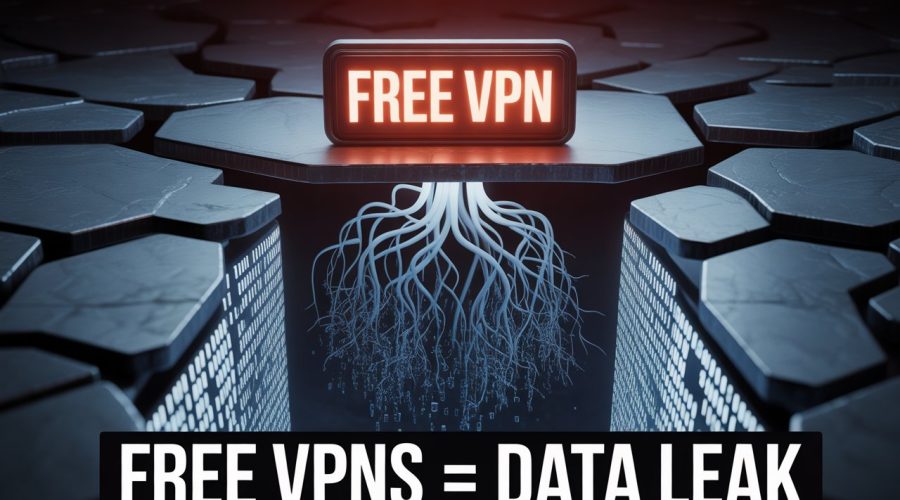
In a digital world where remote work has reshaped how America does business, many US companies are turning to free VPNs in hopes of securing their data without stretching their budgets. But behind the tempting “no-cost” promise lies a dangerous illusion, one that can quietly dismantle your entire security posture. Free VPNs may seem harmless, but they’re engineered with hidden trade-offs that can expose your confidential files, customer information, and internal systems to cybercriminals and data brokers. What looks like a convenient shortcut can quickly become a catastrophic mistake, leading to breaches, compliance violations, and financial fallout. Before choosing the “free” route, it’s crucial to understand the real risks lurking beneath the surface.
When a service is free, the saying goes, you’re not the customer—you’re the product. This truth directly applies to free VPN providers. Unlike premium VPN solutions designed for business needs, free VPNs generate revenue through data monetization. Inserting free VPNs risks for businesses in this context is crucial because your business communications, employee credentials, client information, and confidential transactions can all be collected and sold.
For US businesses, this becomes more than a privacy issue. When sensitive customer data passes through free VPN networks that lack proper security, you expose your company to data breach liability. A single incident may bring millions in regulatory fines, legal fees, and reputational damage. Here again, free VPNs risks for businesses show how quickly “free” can become the most expensive mistake you make.
Free VPN services are infamous for outdated encryption, weak infrastructure, and minimal to zero security audits. This creates multiple attack paths that cybercriminals actively exploit. Every time your remote teams access business systems through a free VPN, they’re often moving through unmonitored servers with poor access controls.
Malicious actors can intercept data, steal login credentials, and gain unauthorized access to your full network. Free VPNs risks for businesses dramatically escalate for healthcare, education, and financial institutions, where federal compliance standards make insecure communication channels completely unacceptable.
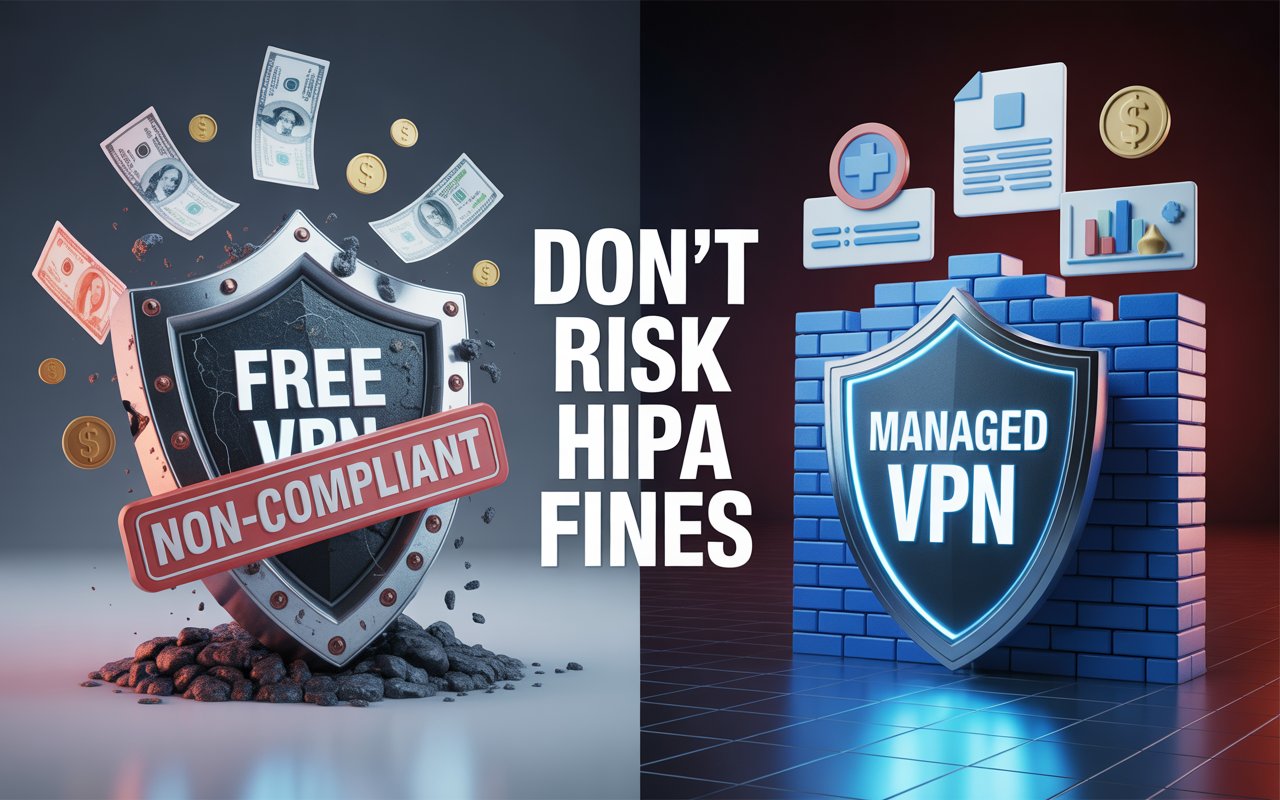
US businesses must navigate complex regulatory frameworks. Healthcare organizations must meet HIPAA, financial institutions must follow GLBA, and publicly traded companies must adhere to SOX. Free VPNs simply cannot meet these security and documentation requirements.
HIPAA compliance is especially rigid. Using a free VPN violates HIPAA’s Security Rule because it lacks mandatory encryption levels, audit logs, and access controls. This is another example of how free VPNs pose risks for businesses, leading to civil penalties of up to $1.5 million per violation annually.
Managed VPN services for small businesses, especially those built for HIPAA, ensure proper audit trails, secure encryption, and compliance reports. In contrast, free VPNs risks for businesses include zero audit capabilities and no documentation for regulators or auditors.
Many free VPNs claim to have a no-logs policy, but in reality, these claims are often false or misleading. Most free VPNs lack the infrastructure to maintain true zero-log operations and often store user data, browsing activity, and communication metadata.
This becomes yet another angle of free VPNs risks for businesses, especially those handling confidential intellectual property, client records, or sensitive communications. A business VPN with a dedicated IP USA provides transparent logging policies essential for compliance, investigations, and security response, features that no free VPN can match.
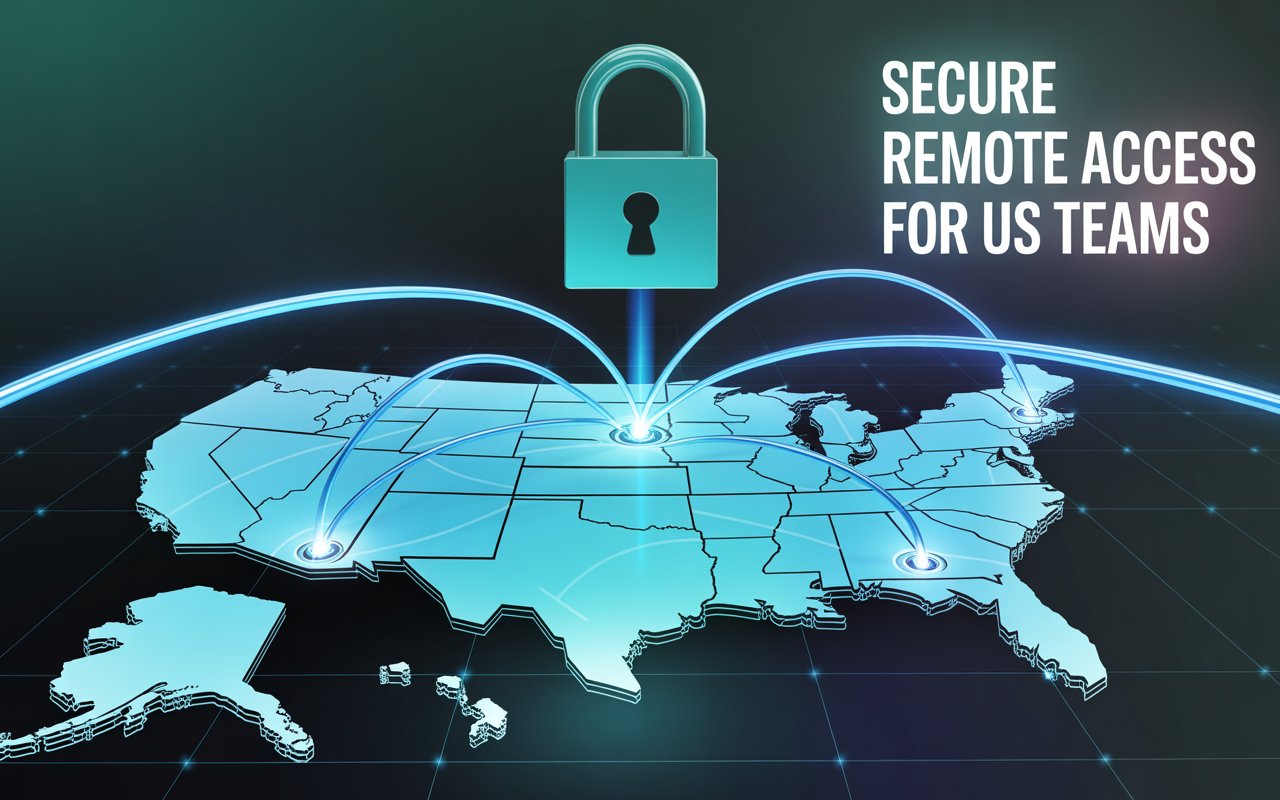
Secure remote access for US remote teams requires enterprise-grade infrastructure, something free VPNs cannot deliver. Managed VPN solutions offer multi-factor authentication, real-time monitoring, dedicated servers, and immediate incident responses.
Meanwhile, free VPNs risks for businesses include exposure to brute-force attacks, credential theft, and insider threats. Without role-based access controls or IP whitelisting, your organization remains wide open to sophisticated attacks.
The healthcare sector faces some of the highest compliance standards in the country. A HIPAA-compliant VPN must include:
Free VPNs offer none of these. This is why free VPNs risks for businesses in healthcare settings that are especially severe. Just one unsecured patient data transfer can ruin a medical practice financially and legally.
The average US data breach costs over $4.5 million, including legal fees, regulatory penalties, incident response, lost business, and notification costs.
When weighed against this, free VPNs risks for businesses drastically overshadow the minor savings of avoiding a paid VPN. And beyond finances, reputational damage can be irreversible, customers lose trust, and competitors leverage your failure.
The choice between free VPNs and managed business solutions directly affects your company’s long-term security. Every business must evaluate:
Understanding free VPNs for businesses helps organizations make an informed, proactive decision that protects their future.
Free VPNs are not a viable security solution for US businesses. The cumulative free VPNs risks for businesses, from data breaches to regulatory violations, far outweigh any cost savings. By investing in a professional business VPN solution, you safeguard your data, comply with regulations, and strengthen customer trust.
Your organization’s security is too important to compromise. Choose a VPN solution that treats your data with the protection it deserves.
When security, compliance, and reliability truly matter, AVS (Anant VPN Services) stands far above free and generic VPN options. Designed specifically for modern US businesses, AVS delivers enterprise-grade encryption, dedicated IP options, HIPAA- and SOC-compliant infrastructure, and real-time threat monitoring. With seamless remote access, blazing-fast performance, and 24/7 expert support, AVS ensures your business data stays fully protected, with no compromises, no risks, and no vulnerabilities.
To get started, contact SkyBound Cyber today to avail our advanced AVS services and secure your business with the protection it genuinely deserves.
Ans: Free VPNs monetize user data and offer minimal security. Managed VPN services prioritize security, compliance, transparency, and 24/7 technical support.
Ans: It’s highly recommended for any business managing sensitive data, financial transactions, or regulated communications.
Ans: No. Free VPNs cannot meet encryption, audit, or documentation requirements necessary for HIPAA compliance.
Ans: It ensures fast performance, seamless authentication, and minimal connection failures, all while maintaining strong security.
Multi-factor authentication, role-based access, real-time monitoring, automatic failover, scalability, and full compliance reporting.